Skip to content

Estero,through time.

6 eras · 1567–2026 · every fact sourced · compiled from the sources shown, not yet reviewed by a historian

Populationfrom 1990

—

Calusa capital at Mound Key

1567–1881: Calusa capital at Mound Key

Era 1 · 1567–1881

Calusa capital at Mound Key

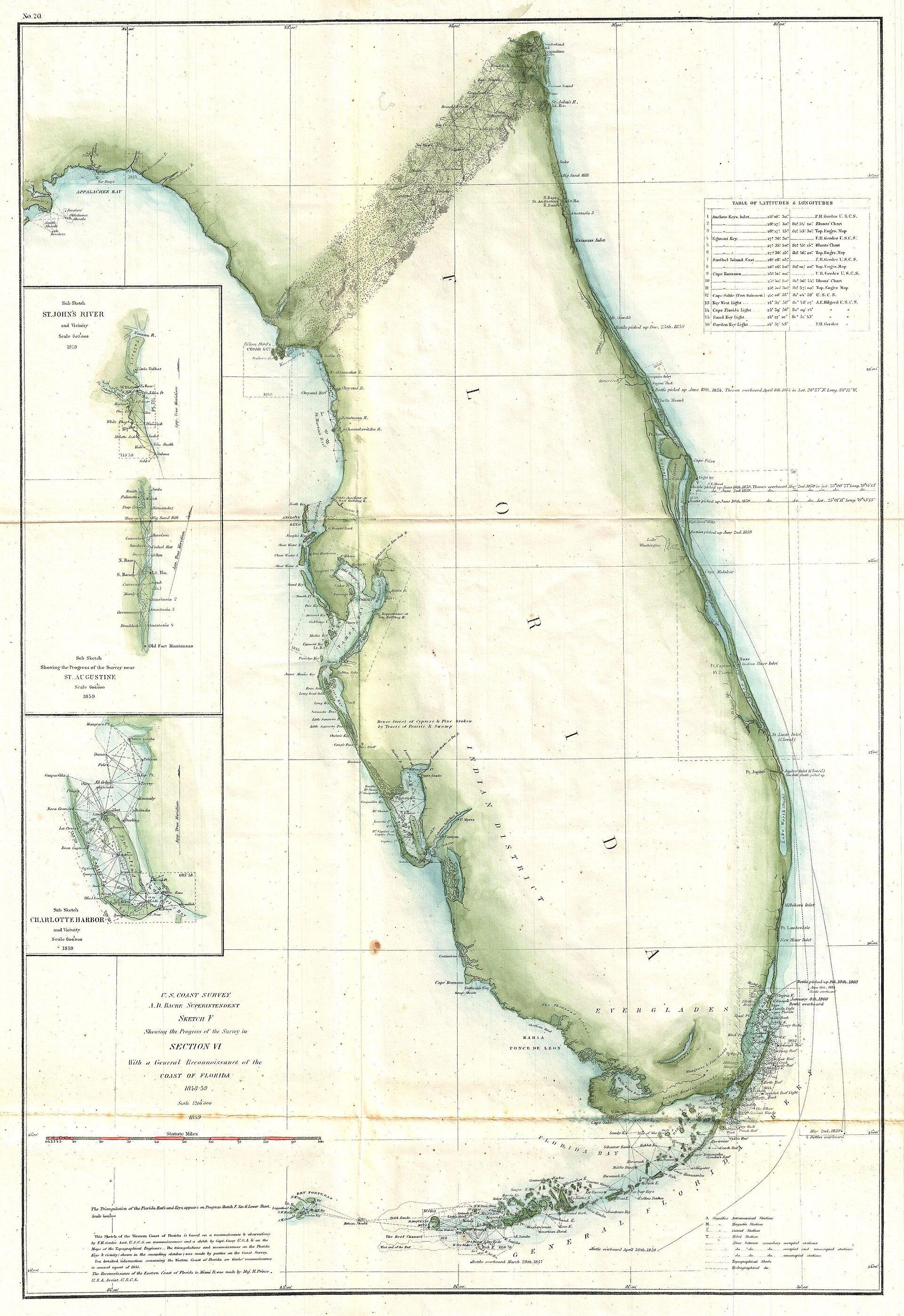
When the Spanish reached Mound Key near the mouth of the Estero River in 1567 they found the thriving capital of the Calusa. By the 1700s the Calusa had gone, leaving the area to Cuban fishermen, outlaws and pirates; around 1850 much of the coastal mainland was still under water.

Image shown for this era: 1859 U.S. Coast Survey triangulation chart of the Florida peninsula, with the Gulf coast running south past Charlotte Harbor toward Key West.. 1859 · U.S. Coast Survey, Report of the Superintendent (1859); scan by Geographicus Rare Antique Maps, via Wikimedia Commons · Public domain · Source

Sources

  1. History of Estero, Estero Historical Society (accessed 2026-11-09)
  2. History of Estero, Estero Historical Society (accessed 2026-11-09)
Correct this era: Calusa capital at Mound Key

Era 2 · 1882–1893

Homesteaders on the Estero River

Once the water table was lowered, the first homesteaders arrived, among them Gustave Damkoehler in 1882. The 1885 census counted nine families in the area.

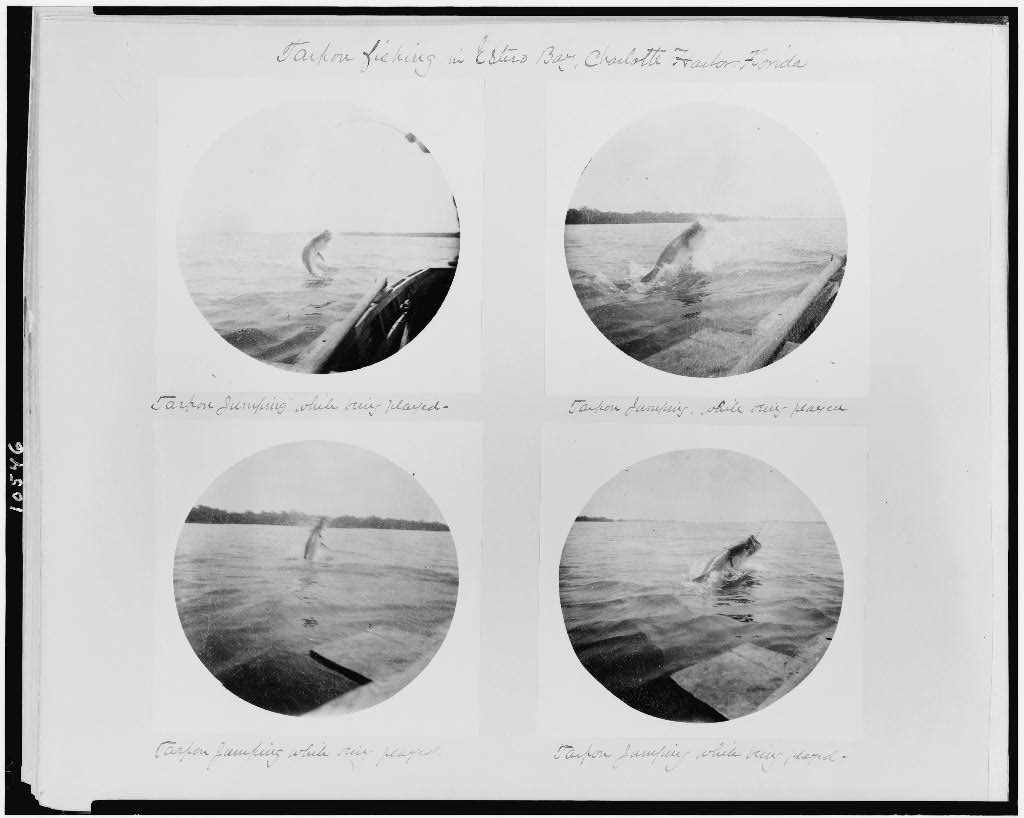
Image shown for this era: Album page of four round snapshots showing a tarpon leaping from the water of Estero Bay beside a fishing boat, about 1890.. 1890 · Library of Congress, Prints and Photographs Division · Public domain · Source

Key moments

  1. Damkoehler family homesteads on the Estero River

    German-born Gustave Damkoehler brought his family to the Estero River to raise silk worms and honey bees.

    Source

    1. History of Estero, Estero Historical Society (accessed 2026-11-09)
  2. Nine families counted

    The 1885 census showed nine families living in the Estero area.

    Source

    1. History of Estero, Estero Historical Society (accessed 2026-11-09)
  3. Mound Key homesteaded

    Frank and Mary (Whitten) Johnson registered Mound Key as their homestead.

    Source

    1. History of Estero, Estero Historical Society (accessed 2026-11-09)

Sources

  1. History of Estero, Estero Historical Society (accessed 2026-11-09)
  2. History of Estero, Estero Historical Society (accessed 2026-11-09)
Correct this era: Homesteaders on the Estero River

Era 3 · 1894–1908

The Koreshan Unity settlement

From 1894 Koreshan Unity members built a communal settlement on the Estero River, with industries, a publishing house and a strong emphasis on education and the arts. The years from 1904 to about 1908 were its peak.

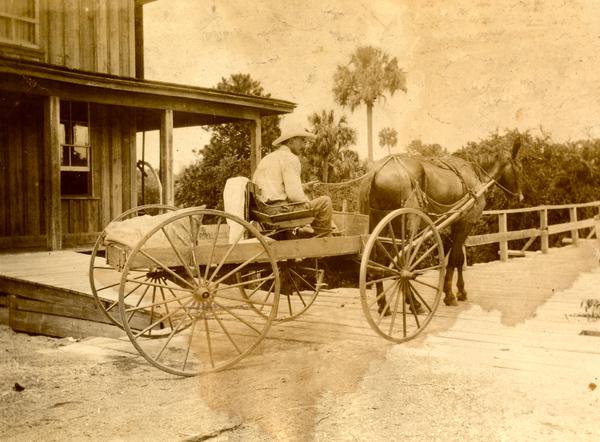
Image shown for this era: A man in a straw hat drives a horse-drawn mail wagon away from the wooden Estero post office porch and boardwalk, with palms behind, about 1900.. 1900 · State Archives of Florida, Florida Memory (Koreshan Unity Collection), via Wikimedia Commons · Public domain · Source

Key moments

  1. The Koreshan Unity settles on the Estero River

    In 1894 homesteader Gustave Damkoehler transferred his Estero River land to Dr. Cyrus R. Teed, leader of the Koreshan Unity, a utopian society that moved its commune from Chicago to Estero.

    Source

    1. History of Estero, Estero Historical Society (accessed 2026-11-09)
  2. The rectilineator survey on the beach

    Koreshans used a measuring device called a rectilineator on the Gulf beach near Estero to try to prove Teed's belief that we live inside a hollow earth.

  3. Chicago colonists arrive and a building boom begins

    Colonists from the closed Chicago cooperative arrived, starting a new phase of construction and relative prosperity at the settlement.

1 more from this era
  1. Cyrus Teed dies

    The Koreshan founder died, and the settlement's membership shrank over the following decades.

Correct this era: The Koreshan Unity settlement

Era 4 · 1909–1960

Groves, fishermen and the Tamiami Trail

After Teed's death in 1908 the Koreshan membership dwindled. Citrus groves spread along the river, Portuguese and Spanish fishing families moved from Mound Key to Highlands Avenue, and in the 1920s the Tamiami Trail and two railroads shifted travel from the river to road and rail.

Image shown for this era: The Koreshan Unity's stucco filling station in Estero with hand-cranked gas pumps, Mobiloil signs and a Goodyear Tires sign, 1930s.. 1935 · State Archives of Florida, Florida Memory (Koreshan Unity Collection), via Wikimedia Commons · Public domain · Source

Key moments

  1. John Horne's house on Sandy Lane

    The Horne family supplied three managers to the large Floweree citrus groves; John Horne's 1916 home still stands on Sandy Lane.

    Source

    1. History of Estero, Estero Historical Society (accessed 2026-11-09)
  2. Koreshans build the Boomer and Campbell houses

    Two substantial two-story houses built by the Koreshans in 1917 still survive in Estero.

    Source

    1. History of Estero, Estero Historical Society (accessed 2026-11-09)
  3. Estero Grammar School opens

    The Mediterranean-style Estero Grammar School served from 1927 to 1949 and survives as a private home on Broadway.

    Source

    1. History of Estero, Estero Historical Society (accessed 2026-11-09)
1 more from this era
  1. Guiding Star press stops publishing

    The Koreshans' Guiding Star Publishing House issued publications until 1949.

Sources

  1. National Register of Historic Places Nomination: Koreshan Unity Settlement Historic District, National Park Service (accessed 2026-11-09)
  2. History of Estero, Estero Historical Society (accessed 2026-11-09)
Correct this era: Groves, fishermen and the Tamiami Trail

Era 5 · 1961–2013

State park and suburban growth

In 1961 the Koreshan Unity deeded its core land to the State of Florida, and the park opened to visitors in 1967. Subdivisions, then condos and gated communities followed, and in the 1990s Florida Gulf Coast University, an arena and outlet shopping arrived.

Image shown for this era: Front of the two-story yellow Planetary Court at Koreshan State Historic Site, at the end of a shell path under a blue sky.. 2010 · Ebyabe, CC BY-SA 3.0, via Wikimedia Commons · CC BY-SA · Source

Key moments

  1. Koreshan land deeded to Florida

    Koreshan Unity, Inc. deeded the land of today's state park to the State of Florida.

  2. Koreshan State Park opens to visitors

    The state park opened its facilities to the public.

  3. Settlement listed on the National Register

    The Koreshan Unity settlement was listed in the National Register of Historic Places.

    Source

    1. Koreshan State Historic Site, The Cultural Landscape Foundation (accessed 2026-11-09)

Sources

  1. National Register of Historic Places Nomination: Koreshan Unity Settlement Historic District, National Park Service (accessed 2026-11-09)
  2. History of Estero, Estero Historical Society (accessed 2026-11-09)
Correct this era: State park and suburban growth

Era 6 · 2014–2026

Village of Estero

Voters approved incorporation in a November 4, 2014 referendum and the Village of Estero was created on December 31, 2014. Hurricane Ian brought storm surge to Estero in 2022.

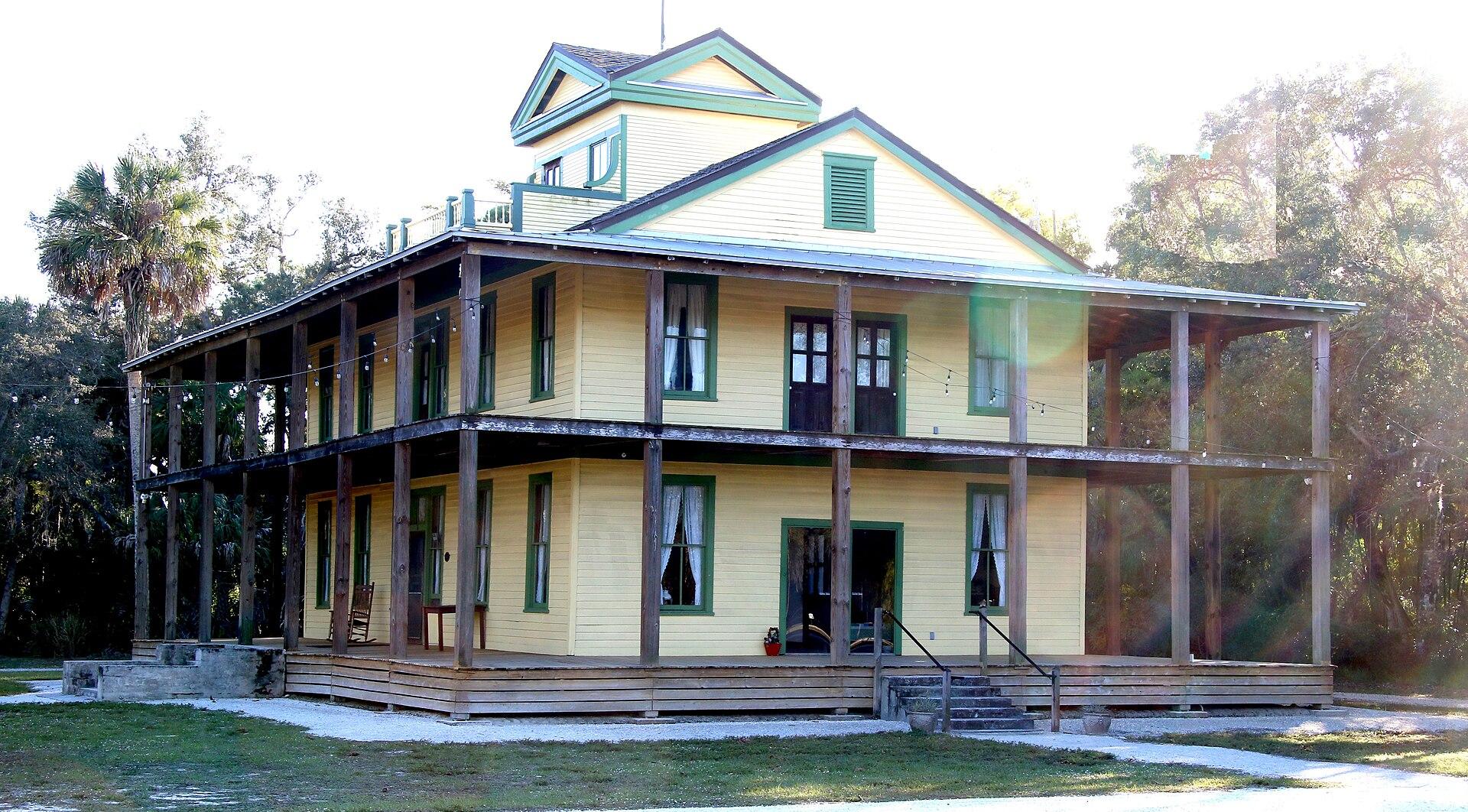
Image shown for this era: The restored two-story yellow Planetary Court with wraparound verandas at the Koreshan Unity Settlement in Estero, in late-afternoon light.. 2023 · kitmasterbloke, CC BY 2.0, via Wikimedia Commons · CC BY · Source

Key moments

  1. Village of Estero created

    After voters approved incorporation in a November 4, 2014 referendum, the Village of Estero officially came into being.

    Source

    1. House of Representatives Final Bill Analysis, CS/HB 983 (2015), Florida House of Representatives (accessed 2026-11-09)
  2. Hurricane Ian's storm surge

    Hurricane Ian's storm surge reached 8 to 12 feet above ground level in Estero.

    Source

    1. Tropical Cyclone Report: Hurricane Ian (AL092022), NOAA National Hurricane Center (accessed 2026-11-09)

Sources

  1. House of Representatives Final Bill Analysis, CS/HB 983 (2015), Florida House of Representatives (accessed 2026-11-09)
Correct this era: Village of Estero

Then & Now

Estero, 1894 to 2026

The Koreshan Unity settles on the Estero River · drag to compare

A man in a straw hat drives a horse-drawn mail wagon away from the wooden Estero post office porch and boardwalk, with palms behind, about 1900.
The restored two-story yellow Planetary Court with wraparound verandas at the Koreshan Unity Settlement in Estero, in late-afternoon light.
18942026

Then image1900 · State Archives of Florida, Florida Memory (Koreshan Unity Collection), via Wikimedia Commons · Public domain · Source

Now image2023 · kitmasterbloke, CC BY 2.0, via Wikimedia Commons · CC BY · Source

Help us get it right

History is never finished.

This timeline is compiled from the public records cited on each era and event. Every quote is checked against its source automatically, and items marked Reviewed have also been checked by a person. Images are public domain or openly licensed, each with its credit. If you know something we’ve missed or got wrong, or you hold records of your own, we’d like to hear from you.

See what’s happening in Estero today →